


CBAM: Europe’s low-carbon aluminium is threatened by a big aluminium scrap loophole
Urgent action is needed to close the CBAM aluminium scrap loophole, which undermines Europe’s industrial competitiveness, climate, strategic autonomy and circular economy objectives.
The EU’s Carbon Border Adjustment Mechanism (CBAM) is a landmark tool designed to extend carbon pricing in Europe to imported products. It is intended to ensure fair competition between EU industries and those in countries with less ambitious climate policies. CBAM is meant to serve as both a climate tool and a mechanism to protect the competitiveness of European industries committed to a sustainable future.
However, the current CBAM rules contain a critical flaw, they fail to account for all carbon emissions of imported aluminium products, thereby undermining the very principles CBAM was designed to uphold. While the European Commission has proposed to include pre-consumer scrap content in CBAM, post-consumer scrap remains excluded, leaving a significant loophole in the system. This jeopardizes both Europe’s global climate ambitions and the competitiveness of industries transitioning toward a low-carbon economy.
The issue
Under CBAM’s current methodology, remelted aluminium scrap is allocated zero emissions and therefore zero carbon costs. While pre-consumer scrap content is now being proposed to be brought into scope, post-consumer scrap content continues to be treated as zero emission and remains outside the mechanism. This gives non-EU producers a significant cost advantage, as they can evade carbon costs under CBAM, while European producers must pay because of the EU Emissions Trading System (EU ETS). In the EU, these costs are embedded in the price of aluminium throughout the value chain, including for scrap, which closely tracks the price of primary aluminium. As a result, European recyclers and manufacturers face a full carbon cost burden, while their international competitors do not.
Estimates suggest that up to one third of Europe’s aluminium recycling capacity could be at risk if the loophole is not addressed.
It is sometimes argued that excluding post-consumer scrap from CBAM supports the circular economy. In practice, however, the opposite is likely. By shielding recycling capacity outside the EU from carbon costs while exposing European recyclers to them, the current approach risks shifting recycling activity and investment abroad rather than strengthening circularity within Europe.
Aluminium scrap represents a significant share of the global aluminium market. The current exclusion of post-consumer scrap allows almost 25 percent of all aluminium globally to evade CBAM costs. By 2035, the aluminium scrap loophole could result in European recyclers facing more than 10 percent higher input costs compared to their non-EU counterparts, amounting to over EUR 200 per tonne of aluminium. This cost disadvantage mirrors the crisis that hit the aluminium industry during the energy price spike following Russia’s invasion of Ukraine, except that this time, it risks becoming a permanent burden on European industry.
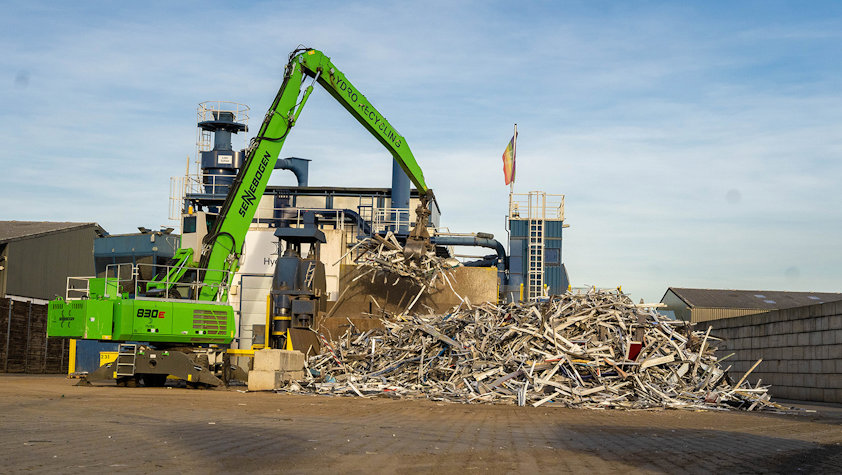
Meanwhile, foreign competitors are able to sell aluminium into Europe at the same price as European producers while paying far lower carbon costs. This enables them to reap large windfall profits at the expense of European industry.
The loophole could also encourage foreign producers to artificially inflate scrap volumes, overproducing, remelting and exporting aluminium scrap to Europe under misleading "carbon-free" claims.
This undermines CBAM’s purpose and weakens global decarbonization incentives while misleading EU consumers. Leaving such large loopholes open for exploitation also deprives the EU and its member states of CBAM revenue.
Questions and answers: CBAM and aluminium scrap loophole
Hydro's main concern is that CBAM's current design creates an unfair competitive disadvantage for EU/EEA low-carbon aluminium producers and recyclers. While pre-consumer scrap content is now proposed to be brought into scope, the regulation continues to assign zero emissions to post-consumer aluminium scrap content in imports, which means foreign competitors can sell remelted aluminium in the European market without incurring the same carbon costs as EU producers. This creates a massive loophole in the system. This undermines the fundamental principle of CBAM, namely, equal costs for equal emissions, and threatens the competitiveness of the European aluminium industry while failing to properly incentivize global decarbonization.
The current proposal would allow a significant share of aluminium, around 25 percent of global supply in the form of post-consumer scrap, to enter the EU without equivalent carbon costs. While European producers face implicit carbon costs through the EU ETS, non-EU producers can reclassify material as “carbon-free” scrap, reaping windfall profits. This creates a clear incentive to overdeclare post-consumer content, allowing imports to avoid CBAM costs despite their underlying emissions.
No. Excluding post-consumer scrap does not support the circular economy, it shifts it. Circularity is not just about recycling rates, but where and how recycling takes place. European recyclers have invested heavily in advanced, regulated recycling technologies and operate under strict environmental and labor standards. By contrast, in parts of the world, sorting is often manual and less regulated. By allowing recycled aluminium produced outside the EU to enter without equivalent carbon costs, while European recyclers continue to face them, the current approach risks shifting recycling activity and investment abroad, at the expense of Europe’s circular economy and strategic autonomy.
The most effective solution is to include all scrap based aluminium imports in CBAM and assign scrap content a default carbon value equivalent to primary aluminium. This requires extending the current proposed approach beyond pre-consumer scrap to also include post-consumer scrap content. This would ensure imported products reflect their true carbon footprint and prevent circumvention through misreported use of scrap.
Additionally, the European Commission must introduce robust verification mechanisms for the declared recycled content of imported aluminium to prevent circumvention.
With post-consumer scrap content still outside of CBAM, the current proposed change to CBAM design still leaves an uneven playing field: while EU producers face full carbon costs through the EU ETS, imports can avoid them where post-consumer scrap, around 25 percent of global aluminium supply, remains excluded from CBAM. This gap creates a strong incentive to misdeclare recycled content. In practice, once aluminium is melted, it is indistinguishable, making it extremely difficult to verify at the border whether scrap is pre or post-consumer. The result is a system that can be easily exploited, allowing imports to avoid carbon costs while European recyclers face a growing disadvantage, putting up to one third of EU recycling capacity at risk.
The current circumvention rules are insufficient because they do not address the fundamental flaw in the proposed methodology: the zero emission treatment of post-consumer aluminium scrap.
This creates a strong incentive to misdeclare recycled content. In practice, this is extremely difficult to verify. Once melted, aluminium is indistinguishable, making it nearly impossible at the border to determine whether scrap is pre or post-consumer. Even a reverse burden of proof would not resolve this, as the underlying material cannot be reliably traced. As a result, the loophole remains open regardless of how strict enforcement is.
If left unchanged, CBAM will:
- Worsen carbon leakage by imposing a lasting cost burden on European industry, echoing the energy crisis after Russia’s invasion of Ukraine.
- Increase costs for European aluminium producers and recyclers while giving foreign competitors a major cost advantage. Therefore, reducing European competitiveness.
- Incentivize the misdeclaration of pre-consumer scrap content as post-consumer scrap in order to evade CBAM costs, undermining genuine decarbonization efforts.
- Jeopardize Europe’s strategic autonomy in critical raw materials, particularly in defense and the energy transition.
Hydro supports CBAM, provided it achieves its intended objectives: protecting Europe’s low-carbon aluminium industry from carbon leakage and driving decarbonization abroad. This requires urgent action to close the scrap loophole, extend the scope to downstream products and limit coverage to direct emissions only. Without these corrections, CBAM risks losing effectiveness and inadvertently disadvantaging European industry.
Yes. In addition to the scrap loophole, Hydro is deeply concerned about the effects of including indirect emissions from electricity on top of direct emissions, as well as the limited CBAM product scope. Indirect emissions are currently out of scope for CBAM on aluminium, but the European Commission is assessing whether to include it at some point. The inclusion of indirect emissions would unfairly disadvantage European aluminium producers who already face high indirect carbon costs from the EU ETS due to the European marginal pricing system for electricity. These indirect carbon costs are unique to Europe. If indirect emissions are added while the ETS indirect carbon cost compensation is removed, it would significantly increase costs for EU producers, including those using 100 percent renewable energy, while this cost would not be mirrored for third country producers.
The aluminium industry’s request is that indirect emissions should be excluded from CBAM until the European grid is much closer to decarbonization and the carbon price element in the power price is substantially lower. Hydro also maintains that ETS indirect carbon cost compensation, which is given by national governments to certain energy and trade intensive industries, is a far superior tool to protect industry against carbon leakage and therefore should be extended post 2030.
Furthermore, another issue is the current CBAM scope covers primary aluminium and some semi-finished products, but it does not cover many finished goods. This could lead to increased costs across the entire supply chain, creating a risk of carbon leakage. The scope remains incomplete, leaving many aluminium intensive products outside the mechanism, while its delayed implementation creates a window for carbon leakage to shift further down the value chain. Without a broader and earlier inclusion of downstream products containing aluminium, combined with a robust and consistent methodology, the extension could increase costs for European downstream producers while allowing imports to retain a structural cost advantage.
There are calls for removing aluminium from CBAM entirely. While it is true the aluminium industry did not initially advocate for CBAM, Hydro is committed to making the mechanism work as intended. If CBAM is not properly reformed, free allocation under the EU ETS remains a more effective tool for preventing carbon leakage provided it is maintained at least at current levels. Moreover, CBAM must not replace indirect carbon cost compensation as a carbon leakage protection measure.
Secondly, aluminium is often treated alongside steel in CBAM design, but the two sectors differ in fundamental ways. As a result, the policy response cannot be identical. CBAM must be tailored to sector specific realities, including the treatment of scrap, rather than applying a one size fits all approach that risks creating distortions for the aluminium value chain.
Hydro is investing in carbon-free aluminium production through renewable energy sources and advanced recycling techniques. However, the current CBAM structure makes it harder for Hydro to compete against non-EU producers who can bypass carbon costs through the scrap loophole.